80% of operational inefficiencies in SMEs come from systems that don't communicate with each other. APIs are the bridge that eliminates that gap.
If you've already read our guide on custom system integration , you know that connecting tools is key. In this article we dive deeper into APIs: what they are, how they work and how much they cost to implement.
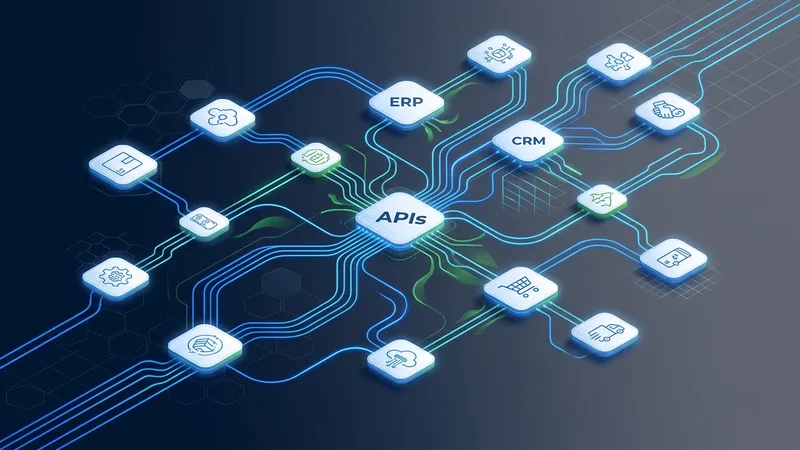
Why Your Systems Don't Talk to Each Other
Most businesses accumulate tools over the years without an integration plan. The result is an ecosystem of data silos that creates friction in every process.
- Duplicate data between CRM, invoicing and spreadsheets forcing weekly manual reconciliations
- Human errors when copying information from one system to another: incorrect orders, invoices with outdated data, inaccurate stock levels
- Slow response times because each department works with its own source of truth without cross-visibility
- Inability to automate processes because tools don't offer a standard way to exchange data

What Is an API (Explained for Executives)
API stands for Application Programming Interface. It is the standard mechanism that allows two systems to exchange data automatically and securely, without human intervention.
Imagine a restaurant: the customer (your application) places an order with the waiter (the API), who takes it to the kitchen (the server) and returns the finished dish. The customer never enters the kitchen, but gets exactly what they need. That's how an API works: it defines the communication rules without exposing the internal complexity.
REST
The most widespread standard. Uses simple HTTP requests (GET, POST, PUT, DELETE) and responds in JSON. Ideal for most business integrations due to its simplicity and broad support.
GraphQL
Allows the client to request exactly the data it needs in a single request. Useful when there are multiple consumers with different needs or when bandwidth is critical.
Webhooks
Real-time notifications: when an event occurs (new order, payment confirmed), the sending system automatically notifies the receiver. They eliminate the need for periodic polling.
SOAP
An older, more formal protocol based on XML. Still present in banking, insurance and public administration. More complex but with strict contracts and robust security standards.
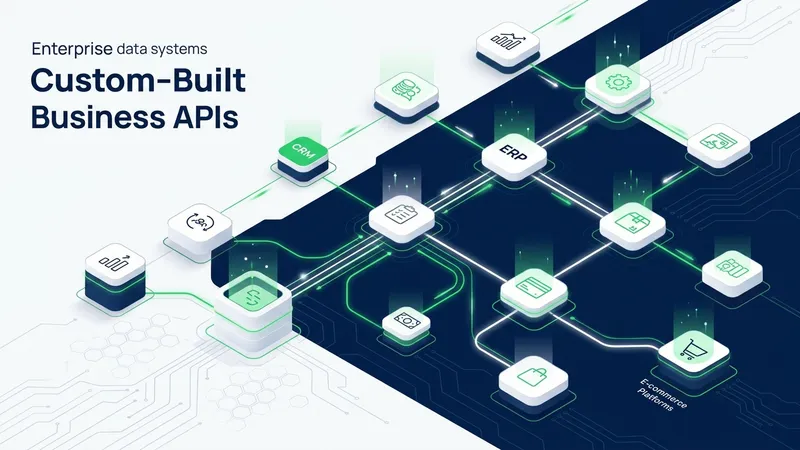
Real Cases: CRM + Invoicing, Web + Warehouse, Payments + Management
These are three integrations we have implemented repeatedly that generate immediate returns in daily operations.
CRM + Automatic invoicing
When a salesperson closes a deal in the CRM, the API automatically generates the invoice in the accounting system, assigns the serial number, applies the corresponding taxes and sends the PDF to the client. Result: from 15 minutes of manual work per invoice to zero human intervention.
Web/eCommerce + Warehouse
Each online order updates stock in real time in the warehouse system. If a product runs out, the website automatically marks it as unavailable. Result: elimination of overselling and 90% reduction in stock-related complaints.
Payment gateway + Management system
Payments confirmed by Stripe or Redsys automatically update the order status, generate the accounting entry and trigger the shipping process. Result: automatic daily accounting close and complete traceability from payment to shipment.
How Much Does a Custom API Cost
The cost depends on the complexity of the systems to connect, the quality of existing documentation and security requirements. These are indicative ranges for 2026:
| Integration type | Complexity | Indicative cost | Estimated timeline |
|---|---|---|---|
| Simple API (2 systems, CRUD) | Low | €600 – €1,500 | 1 – 2 weeks |
| Multi-system integration (3-5 sources) | Medium | €1,000 – €3,000 | 2 – 4 weeks |
| API with complex business logic | High | €1,500 – €4,000 | 4 – 6 weeks |
| Complete integration platform (iPaaS) | Very high | €2,500 – €6,000 | 6 – 8 weeks |
Common Mistakes in API Development
After dozens of integration projects, these are the mistakes we see repeated most frequently:
- Not documenting endpoints: without clear documentation (OpenAPI/Swagger), every change breaks existing integrations and multiplies onboarding time
- Ignoring authentication: exposing sensitive data without tokens, OAuth or API keys is an invitation to security breaches and GDPR penalties
- Not implementing rate limiting: without request limits, a bug in one client can bring down the entire infrastructure
- Coupling business logic to the API: mixing business rules with the transport layer means any change requires redeploying the entire system
- Forgetting versioning: without versions (v1, v2), updating the API forces all consumers to migrate simultaneously or break their integration
Frequently Asked Questions: APIs for Businesses
What is an API in simple terms?
It is a digital bridge that allows two systems to exchange data automatically, without a person having to copy information from one to another. It defines the communication rules so that applications can understand each other.
How much does an API integration cost?
Between €600 and €6,000 depending on complexity. A simple connection between two systems with CRUD endpoints costs around €600-€1,500, while a multi-system integration platform can exceed €6,000.
Do I need to change my current systems to integrate them with APIs?
No. The API acts as a bridge between your existing systems, preserving your current investment. You don't need to replace your CRM, ERP or invoicing system; the API adapts to them and connects them.
How long does an API integration take?
Between 1 and 8 weeks depending on complexity. A simple integration between two systems can be ready in 1-2 weeks. Projects with multiple data sources, complex business logic or advanced security requirements may require 4-8 weeks.
Conclusion
APIs are the backbone of any business that wants to operate efficiently in 2026. It's not about technology for technology's sake, but about eliminating the friction that slows your growth: duplicate data, manual errors, slow processes. The good news is you don't need to replace your current systems; a well-designed API connects them and makes them work together. At ASD Solutions we have been helping businesses break their data silos with robust and scalable integrations for years. If your systems don't talk to each other, let's talk.