70% of digital transformation projects fail — not because of technology, but because of a lack of strategy. This guide shows you how to be in the 30% that succeed.
If you run an SME and feel like your competitors are outpacing you on digitalisation, you are not alone. In our technology consulting practice, we see companies every week that want to make the leap but don't know where to start. This guide is the starting point you need.
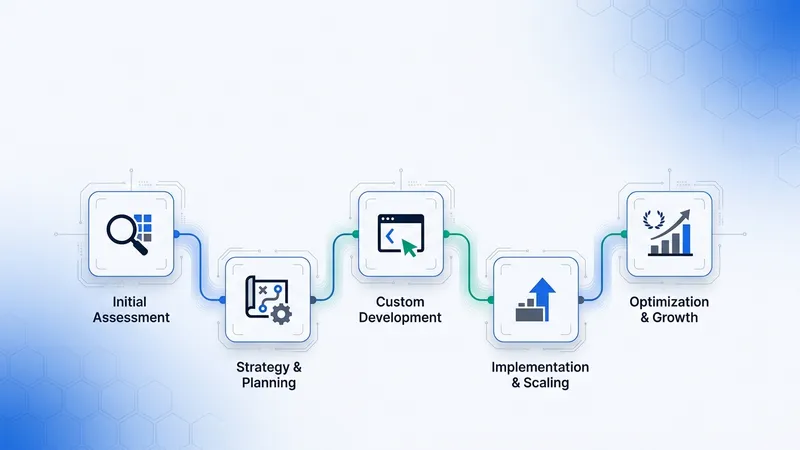
Why Digital Transformation Projects Fail
Before talking about solutions, it helps to understand the mistakes that sink most digital initiatives in SMEs:
- Digitising without a clear goal: buying technology tools without knowing what problem they solve or what metric they should improve
- Ignoring the human factor: deploying systems without training, without change management and without listening to the people who will use them daily
- Trying to transform everything at once: tackling every department simultaneously instead of starting with a controlled pilot
- Not measuring results: launching projects without defined KPIs, making it impossible to know whether the investment is generating real returns
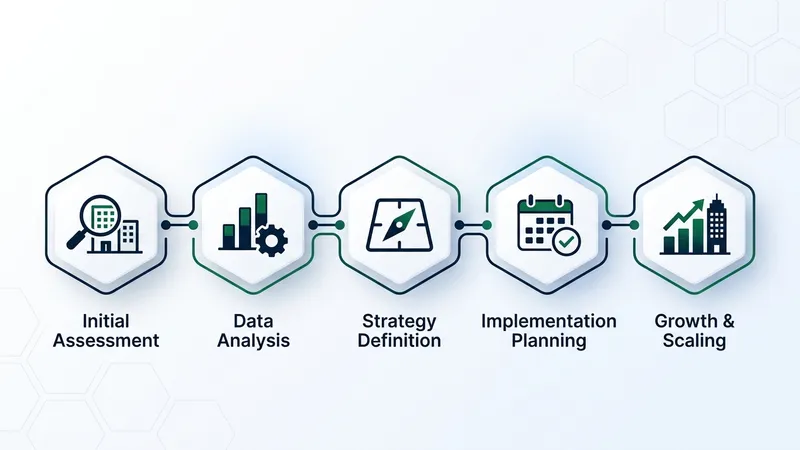
Digital Assessment: Evaluate Where Your Business Stands
Before investing a single euro, you need to know your starting point. This table helps you identify your digital maturity level:
| Area | Basic State | Advanced State |
|---|---|---|
| Operations | Manual processes, spreadsheets, duplicated tasks | Automated workflows, single integrated system, real-time alerts |
| Data | Information scattered across local files with no standard format | Centralised database with dashboards and automated reporting |
| Customer | Reactive support, no unified history, no post-sale follow-up | Integrated CRM with full traceability and omnichannel communication |
| Communication | Personal email and WhatsApp, documents shared via USB drive | Collaborative platform with chat, tasks and cloud-based documents |
| Infrastructure | On-premises server, manual backups, no contingency plan | Hybrid cloud, automated backups, tested disaster recovery |
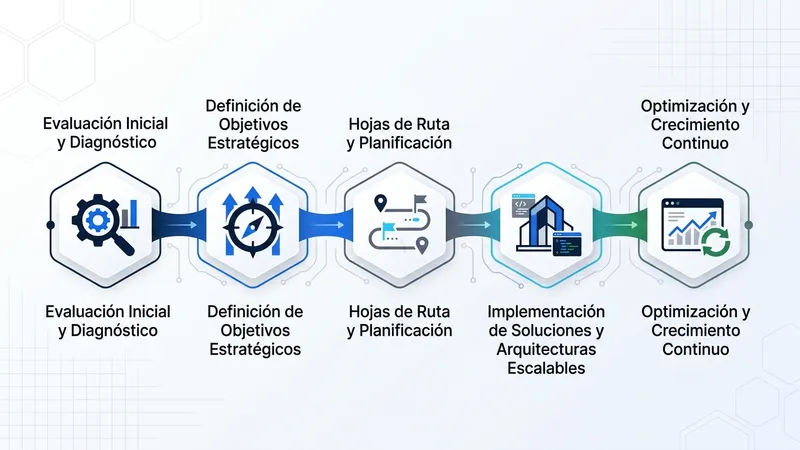
A 5-Phase Roadmap
A realistic roadmap for an SME with 10 to 100 employees. Each phase builds on the previous one:
- Audit and assessment (months 1-2). Map current processes, identify bottlenecks and define the 3 KPIs that will measure the project's success.
- Controlled pilot (months 2-4). Choose a specific department or process, implement the solution and measure results before scaling.
- Integration and automation (months 4-8). Connect existing systems (ERP, CRM, invoicing), eliminate data silos and automate repetitive tasks.
- Training and adoption (months 6-12). Train the team through hands-on sessions, appoint internal digital champions and adjust processes based on real feedback.
- Continuous optimisation (month 12+). Review KPIs quarterly, add new features as the business requires and keep the infrastructure up to date.
Public Funding and Grants
Financing digital transformation is more accessible than you might think. These are the main funding sources available in 2026:
- Regional digitalisation programmes: each autonomous community manages European funds with its own calls for SME applications
- Acelera Pyme (Red.es): a free advisory programme offering digital assessments and specialised training
- ICO credit lines for digitalisation: reduced-rate financing for technology projects with repayment terms of up to 7 years
- R&D tax deductions: custom software investments may qualify as R&D&I deductions on corporate tax
To estimate the total cost of your project, check out our software development budgeting guide with data updated for 2026.
Signs You Cannot Wait Any Longer
If you recognise three or more of these signs, digital transformation should be your immediate priority:
- Your team spends more than 5 hours a week manually copying data from one system to another
- You cannot produce an up-to-date sales report in less than 24 hours
- You have lost customers because a competitor offers a digital experience you cannot match
- Your server is over 5 years old and backups are done on an external hard drive
- Critical business knowledge lives in one person's head rather than in a system
If your company still relies on spreadsheets, read our guide on how to move from Excel to custom software .
FAQs: Digital Transformation for SMEs
How much does digital transformation cost for an SME?
A mid-range digital transformation project for an SME typically ranges from EUR 3,000 to EUR 8,000, but you do not need to tackle everything at once. You can start with a pilot of around EUR 1,000 in a single department, measure results and scale with real data that justifies the investment.
How long does it take to digitise an SME?
A full transformation usually takes between 3 and 6 months, depending on the company's size and the complexity of its processes. However, with a well-defined pilot you can see partial results from the first month: automating a workflow, real-time reporting or integrating a CRM.
Is the Kit Digital programme still active in 2026?
The original Kit Digital programme closed its calls, but in 2026 there are regional programmes funded by European funds and the Acelera Pyme programme from Red.es, offering free assessments and advisory services. Each autonomous community publishes its own calls with specific requirements and deadlines.
Do I need a CTO for digital transformation?
Not necessarily. For most SMEs, hiring a full-time CTO is not cost-effective. An external technology partner fills that strategic role: defining the architecture, overseeing implementation and training the internal team — without the fixed cost of a senior executive position.
Conclusion
Digital transformation is not about installing tools: it is about rethinking how your business operates to become more agile, more profitable and more competitive. The SMEs that succeed share three traits: they start with a small pilot, they measure from day one, and they work with a technology partner that understands their business. At ASD Solutions we support SMEs through every phase of the process, from assessment to continuous optimisation. If your competitors are already digitising, the cost of inaction is greater than the cost of any technology project.