When I opened the spreadsheet it had 7 tabs, each with its own version of the truth. They had been like that for 7 years. Nobody knew which one was correct.
If this story sounds familiar, your business has probably outgrown generic tools. In our guide on how to move from Excel to custom software we explain the full migration process. Here are the signs that tell you the time has come.
Sign 1: Copy and Paste Is an Actual Job
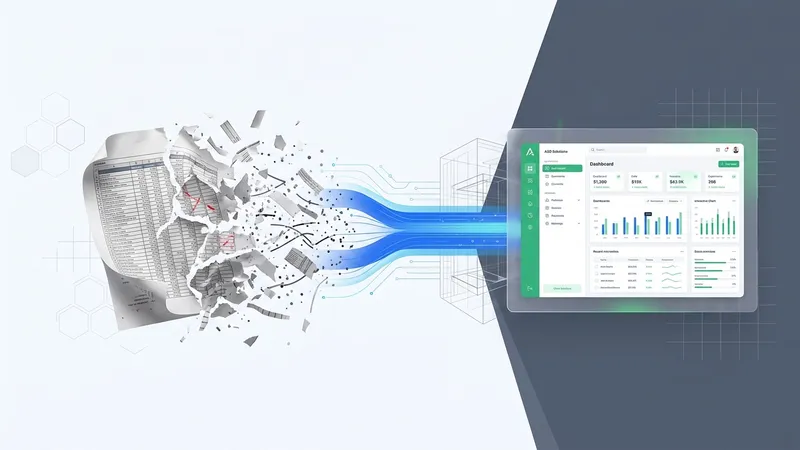
If your team spends hours every day copying data from one system to another, from a spreadsheet to an email, from an email to an ERP, you are paying salaries to do an API's job. Custom software connects your systems and eliminates manual data entry.
Before
4 hours/day
After
15 minutes
Sign 2: Information Is Always Outdated
When every department maintains its own spreadsheet, the data never adds up. Sales says one thing, accounting another and operations a third. Custom software centralises information into a single source of truth updated in real time.
Before
3 different versions
After
1 source of truth
Sign 3: Bottlenecks Have a Name
If everything stops when one person is on holiday or sick, your process depends on people, not systems. Custom software automates workflows so that knowledge lives in the system, not in a single person's head.
Before
3 days to close month
After
3 hours
Sign 4: You Can't Generate Reliable Reports
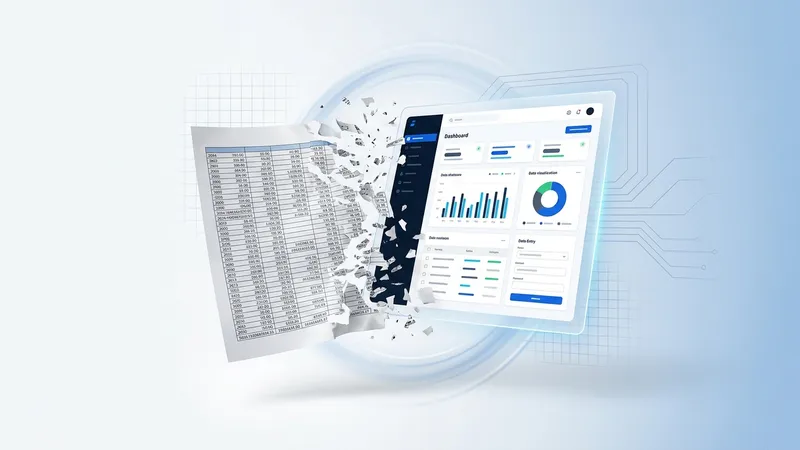
If preparing a report for management takes two days of gathering data from different sources, cleaning duplicates and reconciling figures by hand, your business is making decisions blind. Custom software generates real-time dashboards with always up-to-date data.
Before
2 days preparing reports
After
Real-time dashboard
Sign 5: Your Tool Can't Grow With You
You subscribed to a SaaS that worked fine with 10 users, but now you are 50 and the price has tripled without any improvement in features. Or worse: you need a feature the vendor has no plans to build. Custom software scales with you and adapts to your real needs.
Before
Limited by vendor
After
Scales without limits
When Is the Right Time to Act
Not every business needs custom software from day one. But there are three key moments when the investment pays for itself:
- When the cost of inefficiency exceeds the cost of development: if you lose more than 20 hours a week on repetitive manual tasks, custom software pays for itself in months
- When your current tool holds back growth: if you can't scale, launch a new product or enter a new market because your system won't allow it, you are losing opportunities
- When the competition has already done it: if your competitors operate with their own tools and you are still on spreadsheets and emails, the gap widens every day
Development Costs vs Inefficiency Costs
Custom software has an initial cost of between 1,500 and 10,000 euros depending on complexity. It seems like a lot until you calculate what it costs you not to have it.
A company with 10 employees that loses 2 hours daily to manual processes is wasting 5,200 hours a year. At an average cost of 25 euros per hour, that is 130,000 euros per year in inefficiency. A 4,000-euro software that reduces that loss by 70% generates a positive ROI in less than 1 month.
Frequently Asked Questions: Custom Software for Businesses
How much does custom software cost?
The cost ranges between 1,500 and 10,000 euros depending on complexity, number of integrations and required modules. However, the ROI is typically recovered within 3 to 6 months thanks to the elimination of manual processes and improved decision-making.
Can I start with something small?
Yes, in fact it is recommended. A pilot module costing between 1,000 and 2,000 euros lets you validate the approach, measure real results and scale with confidence. Starting with the most critical process maximises impact from day one.
What happens to my data in Excel?
It is migrated to the new system during the implementation phase. A good provider includes data cleaning, transformation and validation as part of the project, ensuring no information is lost and that the transition is transparent for the team.
Will my team adapt to the new system?
Yes, as long as they are involved from the design phase and properly trained. Custom systems are designed around the team's existing workflows, which drastically reduces the learning curve compared to generic software.
Conclusion
If your business shows any of these five signs, custom software is no longer optional -- it is the next logical investment. Every day with manual processes, outdated data and tools that do not scale accumulates avoidable costs. You do not have to make the leap all at once either: a pilot module costing EUR 1,000-2,000 lets you measure real results before scaling.
